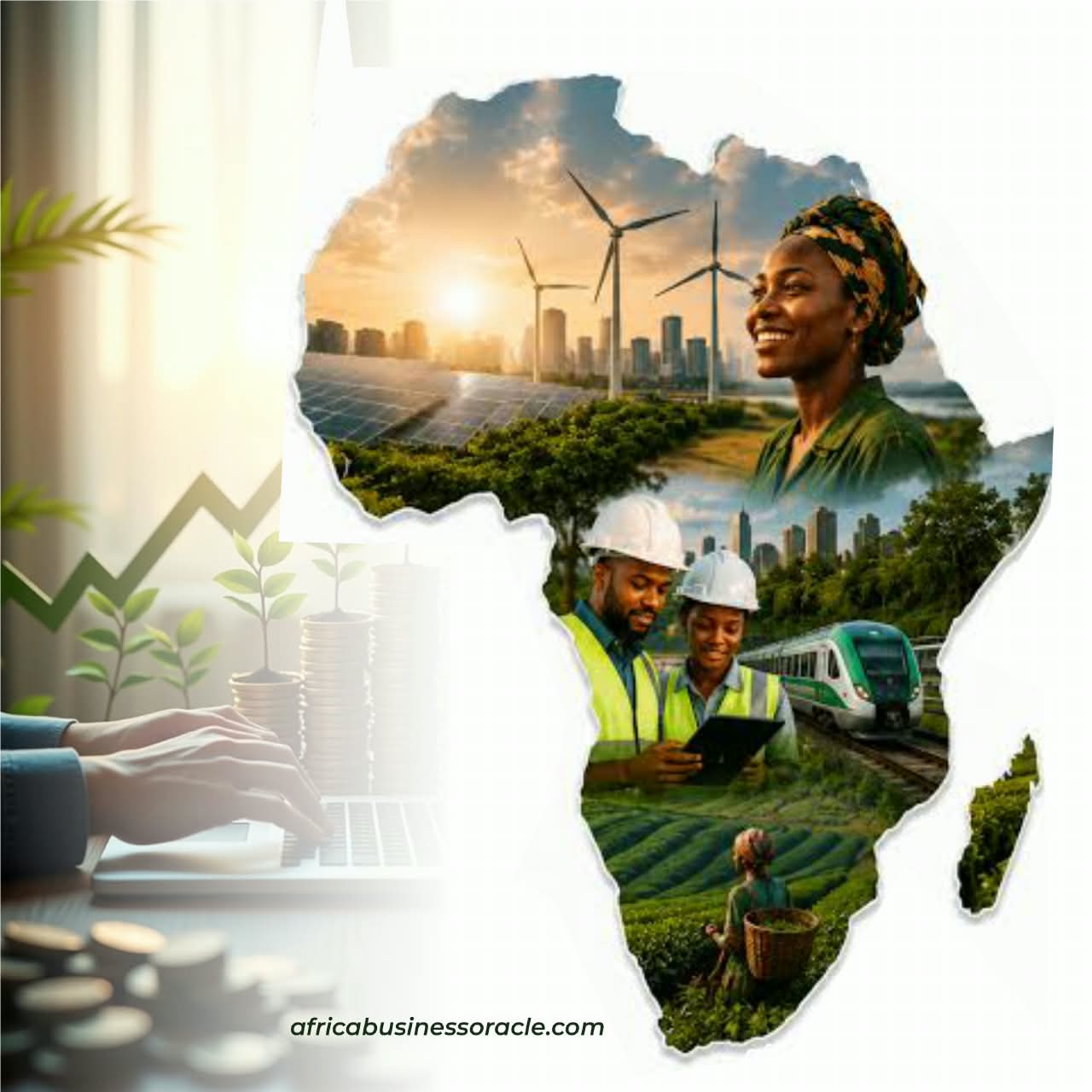

Africa has a power problem, but for entrepreneurs, that problem is also creating one of the continent's biggest business opportunities.
Millions of households and businesses still struggle with unreliable or inadequate electricity, while demand for power continues to rise as African economies expand, cities grow and more businesses depend on digital technology.
According to the International Energy Agency (IEA), private-sector clean-energy investment in Africa increased from about $17 billion in 2019 to almost $40 billion in 2024. Solar photovoltaic power has also become the least-cost source of electricity in many African countries. (IEA)
The opportunity is therefore no longer limited to companies building giant solar farms. Entrepreneurs can build businesses around installing solar systems, maintaining equipment, financing clean energy, providing battery storage, powering businesses, selling renewable-energy products and taking electricity to communities that the national grid does not adequately serve.
In 2026, the African Development Bank and World Bank are also putting significant capital behind decentralised renewable energy. Their Project Zafiri specifically targets businesses working in mini-grids, solar home systems, commercial and industrial renewable energy, clean cooking, battery storage and small-scale independent power projects. (African Development Bank)
So, where are the opportunities?
Here are 10 renewable energy businesses African entrepreneurs can build.
1. Solar Installation and Maintenance
You do not necessarily need to manufacture solar panels to make money from solar energy. One of the most accessible opportunities is becoming a solar installation and maintenance company.
Homes, offices, schools, hospitals, hotels, shops, farms and factories all need reliable power. Many are already turning to solar systems as a way to reduce dependence on unreliable grids and expensive generators.
A business can specialise in:
- Solar panel installation
- Inverter installation
- Battery systems
- Solar streetlights
- Solar water pumps
- System maintenance
- Fault diagnosis and repairs
- Energy audits
The important thing is to build more than an installation business.
A company that only installs equipment once may struggle with inconsistent revenue. A company that also offers maintenance contracts, battery replacement, system upgrades and monitoring can create recurring income.
Nigeria is a particularly interesting market. IRENA's 2025 review noted that Nigeria's official installed solar PV capacity stood at only 197 MW, including 124 MW of off-grid capacity, while solar-panel imports reached 1.33 GW in 2024. (IRENA)
That gap tells entrepreneurs something important: Demand for solar equipment is already there.
2. Solar Mini-Grid Businesses
What happens when an entire community needs electricity but extending the national grid is too expensive or impractical? A solar mini-grid can provide an answer.
Mini-grids are decentralised electricity systems that can supply power to communities, villages, businesses and public facilities. This is becoming a serious investment area.
The World Bank approved a $200 million financing package in 2026 to expand renewable-energy access in Benin, the Central African Republic, Liberia and Sierra Leone through solutions including solar home systems and mini-grids. The wider Regional DARES programme is valued at $853 million. (World Bank)
In Nigeria, IFC and Norfund are supporting five renewable-energy companies to expand off-grid power. The programme represents an estimated $271 million in total capital expenditure and is expected to support 315 solar-hybrid mini-grid sites and connect about 2.9 million people. (IFC)
For entrepreneurs, the business model can involve developing, financing, operating and maintaining mini-grids and charging customers based on their electricity consumption.
It is capital-intensive, but it can also create long-term infrastructure businesses.
3. Solar Power for Businesses and Industries
Small businesses are not the only customers for renewable energy. Factories, supermarkets, hotels, schools, hospitals, farms, offices and warehouses are increasingly looking for ways to reduce their electricity costs and improve reliability. This creates an opportunity for commercial and industrial solar companies. Instead of selling a solar system to a household, entrepreneurs can design larger energy systems for businesses.
For example, a company could install a solar-and-battery system for a hotel and charge through:
- Equipment sales
- Installation fees
- Maintenance contracts
- Long-term energy agreements
- Energy-as-a-service models
The IEA has noted that investors are increasingly paying attention to commercial and industrial solar because business customers can provide more predictable offtake than some residential markets. (IEA)
This is particularly attractive in countries where businesses spend heavily on diesel or petrol generators.
The opportunity is simple: help businesses spend less on power while giving them more reliable electricity.
4. Battery Storage Businesses
Solar panels generate electricity when the sun is shining, but businesses still need electricity at night. That is where batteries come in.
Battery energy storage is therefore becoming an increasingly important part of renewable-energy systems.
Entrepreneurs can build businesses around:
- Selling batteries
- Installing battery storage systems
- Battery maintenance
- Battery leasing
- Battery recycling
- Backup power systems
- Solar-plus-storage solutions
- Energy management systems
The AfDB and World Bank's Project Zafiri specifically identifies battery energy storage systems as one of the decentralised renewable-energy opportunities it intends to support across Sub-Saharan Africa. (African Development Bank)
As more homes and businesses install solar, the demand for better storage is likely to grow alongside it.
5. Solar-Powered Agriculture Businesses
Africa's agricultural sector has a huge energy problem. Farmers need electricity for irrigation, refrigeration, processing, drying, milling and storage. Diesel-powered equipment can be expensive to operate, particularly when fuel prices rise. That creates an opportunity for entrepreneurs to combine renewable energy with agriculture.
Possible businesses include:
- Solar irrigation systems
- Solar-powered cold rooms
- Solar dryers
- Solar-powered grain mills
- Solar water pumps
- Solar-powered livestock systems
- Solar refrigeration for agricultural produce
Instead of selling solar equipment as a standalone product, the entrepreneur is selling a solution to a specific agricultural problem. For example: “We help farmers reduce post-harvest losses using solar-powered cold storage.” That is a much stronger business proposition than simply saying: “We sell solar systems.”
6. Solar Home Systems and Pay-As-You-Go Energy
Not every customer can afford to pay for a complete solar system upfront. This creates another business opportunity: financing the equipment rather than simply selling it.
A pay-as-you-go model allows customers to make smaller payments over time while gaining access to solar electricity. This can be particularly useful for households and small businesses outside reliable grid coverage.
The model has already become an important part of Africa's decentralised-energy ecosystem. Project Zafiri identifies solar home systems alongside mini-grids and commercial renewable-energy projects as key areas for investment.
An entrepreneur could combine: Solar equipment + mobile payments + customer financing + after-sales support. That turns renewable energy into an ongoing service rather than a one-time sale.
7. Renewable Energy for Water and Clean Cooking
Renewable energy can solve more than electricity problems. It can also be used for water access and clean cooking.
Entrepreneurs can build businesses around solar-powered water pumps for farms and communities, while clean-cooking businesses can provide alternatives to traditional fuels.
The AfDB and World Bank's Project Zafiri explicitly includes clean cooking among the decentralised renewable-energy opportunities being targeted for investment. (African Development Bank)
Business opportunities include:
- Solar water pumping
- Solar-powered boreholes
- Clean cooking systems
- Efficient biomass solutions
- Electric cooking technologies
- Solar-powered water purification
- Community water systems
The advantage is that entrepreneurs can combine energy with another urgent need. Instead of selling “renewable energy,” they are selling water, cooking solutions or agricultural productivity powered by renewable energy.
8. Solar Street Lighting and Public Infrastructure
Street lighting is another practical renewable-energy business.
Solar streetlights can be installed in:
- Residential areas
- Roads
- Markets
- Schools
- Rural communities
- Industrial estates
- Parking areas
- Public facilities
Unlike conventional streetlights, solar-powered systems can operate independently of the national grid.
Entrepreneurs can therefore work with private developers, communities, businesses, NGOs and government agencies to supply and maintain solar lighting infrastructure.
The business does not end when the lights are installed. Maintenance contracts, battery replacement, repairs and monitoring can create additional revenue.
For an entrepreneur, that recurring service component can be just as important as the initial installation.
9. Renewable Energy Equipment Manufacturing and Assembly
Africa imports a large amount of renewable-energy equipment. That creates an opportunity for entrepreneurs willing to move beyond distribution into local assembly and manufacturing.
Possible products include:
- Solar panels
- Mounting structures
- Solar streetlights
- Inverters
- Batteries
- Solar water pumps
- Charge controllers
- Cables and electrical components
Nigeria is already exploring greater local production. IRENA reported that plans were underway for solar-panel manufacturing and assembly capacity, including a proposed 1.2 GW solar assembly plant and another planned 1 GW solar-panel manufacturing facility with a target of 50% local content within its first three years. (IRENA)
This does not mean every entrepreneur needs to build a factory. There are opportunities further down the supply chain—from components and mounting systems to packaging, installation hardware and repair parts.
The long-term opportunity is to ensure that Africa does not simply become a huge market for imported clean-energy products. It can also become a producer.
10. Renewable Energy Consulting and Energy Auditing
Not every renewable-energy business requires large amounts of equipment. Entrepreneurs with technical, engineering or energy-management skills can build energy consulting businesses.
Companies often do not know exactly how much energy they consume, where they waste money or what renewable-energy system would make financial sense.
An energy consultant can assess:
- Electricity consumption
- Generator expenses
- Solar potential
- Battery requirements
- Energy efficiency
- Equipment performance
- Potential savings
- Renewable-energy investment options
The consultant can then help the client design a transition plan. This can also become a gateway into larger opportunities.
A consultant who identifies that a factory could save significantly through solar may subsequently manage the installation, monitoring and maintenance project. In other words, expertise can become the entry point into a much larger energy business.
Why Renewable Energy Is Becoming a Bigger Business Opportunity in Africa
The renewable-energy opportunity is being driven by several forces at the same time.
1. Africa still has a huge electricity-access gap
The continent still has hundreds of millions of people without reliable electricity. Chatham House estimated in January 2026 that almost 600 million Africans still lacked access to electricity, highlighting the scale of the opportunity for decentralised solutions such as solar mini-grids. (Circular Economy)
2. Businesses need more reliable power
A business cannot operate efficiently if electricity constantly goes off. That makes reliable renewable energy valuable even when customers are already connected to the national grid.
3. Clean-energy investment is growing
The IEA estimates that private-sector clean-energy investment in Africa almost doubled between 2019 and 2024, reaching nearly $40 billion. (IEA)
4. Renewable energy creates jobs
The global renewable-energy industry employed at least 16.6 million people in 2024, according to the latest IRENA/ILO annual review. The report also notes that continued renewable deployment is expected to keep adding employment, increasing the need for training and skills development. (IRENA)
Africa's renewable-energy opportunity therefore isn't only about electricity. It is also about jobs, manufacturing, engineering, distribution, finance, maintenance and entrepreneurship.
The Biggest Opportunity May Not Be Selling Solar Panels
This is where many aspiring entrepreneurs get the renewable-energy opportunity wrong. Everyone sees solar panels. Not everyone sees the businesses around them.
The bigger opportunities may be in: financing the equipment, installing it, maintaining it, storing the electricity, powering farms, serving factories, building mini-grids, training technicians, manufacturing components and creating software that manages energy systems.
That is where entrepreneurs can build businesses that solve real problems rather than simply selling another product. And the opportunity is increasingly being recognised by major development-finance institutions.
The AfDB and World Bank's renewable-energy investment initiatives are specifically looking for private-sector businesses operating across mini-grids, solar home systems, commercial and industrial power, batteries, clean cooking and other decentralised energy solutions. (African Development Bank)
What Entrepreneurs Should Consider Before Entering the Sector
Renewable energy is promising, but it is not automatically an easy business.
Entrepreneurs need to think about:
- Capital: Some energy businesses require significant upfront investment.
- Technical expertise: Poor installation can damage equipment and destroy customer trust.
- After-sales service: Customers need repairs, maintenance and support.
- Financing: Many customers cannot afford large upfront payments.
- Regulation: Energy businesses may require licences, approvals or compliance with local regulations.
- Import dependence: Equipment costs can be affected by exchange rates and international supply chains.
- Customer education: Some markets still require considerable education before customers understand the long-term value of renewable energy.
The smartest entrepreneurs will therefore not enter the sector simply because “solar is trending.” They will identify a specific energy problem, understand the customer who has that problem and build a business around solving it profitably.
Renewable Energy Is More Than an Environmental Opportunity
For Africa, renewable energy is increasingly becoming a business opportunity, an infrastructure opportunity and an economic-development opportunity at the same time.
A solar installation company can create jobs.
A battery business can support other renewable-energy companies.
A solar-powered cold room can help farmers reduce losses.
A mini-grid can allow shops, salons, workshops and small factories to operate more reliably.
A local manufacturing company can create an entirely new supply chain.
That is why renewable energy deserves the attention of African entrepreneurs.
The biggest opportunity may not be in building the next massive power company. It could be in solving one frustrating electricity problem for one group of customers, and then finding a way to solve that problem for thousands more.
Africa needs more power. And for entrepreneurs willing to build the businesses that can deliver it, that need could become one of the continent's biggest opportunities of the next decade.
